
Tooth Extraction Northville: Why Dentists Sometimes Recommend Removing a Tooth
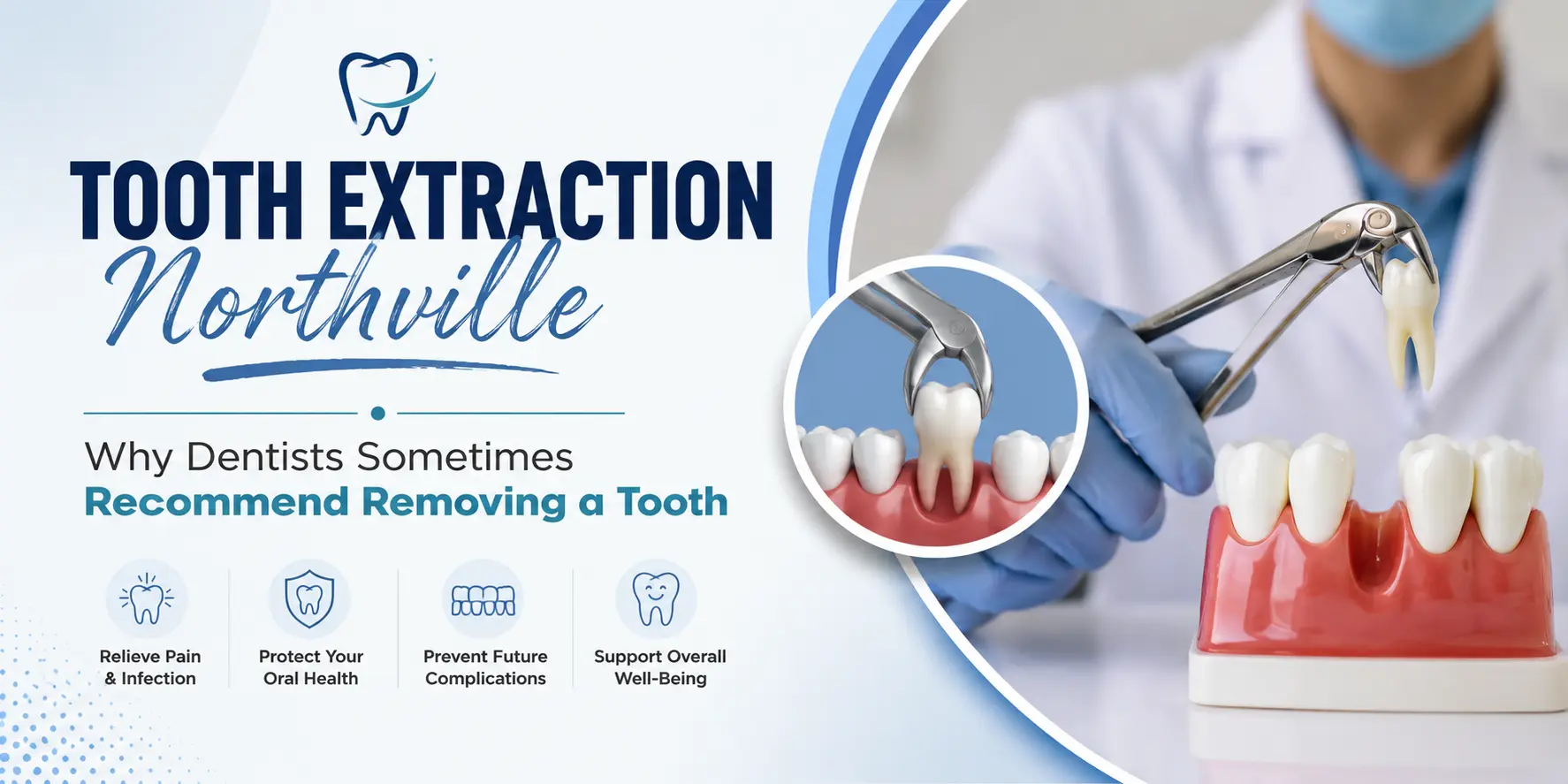
You wake up with a throbbing toothache that just won't quit. Painkillers help for a few hours, but the discomfort keeps coming back. Then your dentist says the words nobody wants to hear: "We may need to remove it." If you're searching for a tooth extraction in Northville, you're not alone. Every week, families across Northville, Plymouth, and Novi visit our office worried about losing a tooth.
The truth is, modern tooth extraction is safe, gentle, and often the smartest path to long-term oral health.
This guide walks you through everything you need to know about why extractions are recommended, what happens during the procedure, what recovery looks like, and how much it costs.
What Is a Tooth Extraction?
A tooth extraction is a dental procedure where a dentist or oral surgeon removes a tooth from its socket in the jawbone. It's one of the most common procedures performed in dentistry today.
There are two main types: simple extractions for visible teeth and surgical extractions for teeth that are broken at the gumline or impacted (like wisdom teeth). Millions of dental extractions, including wisdom tooth removals, are performed safely in the U.S. every year.
At Elite Smile Family Dentistry in Northville, we only recommend extraction when it's truly the best option for your long-term health.
Top Reasons Dentists Recommend Removing a Tooth
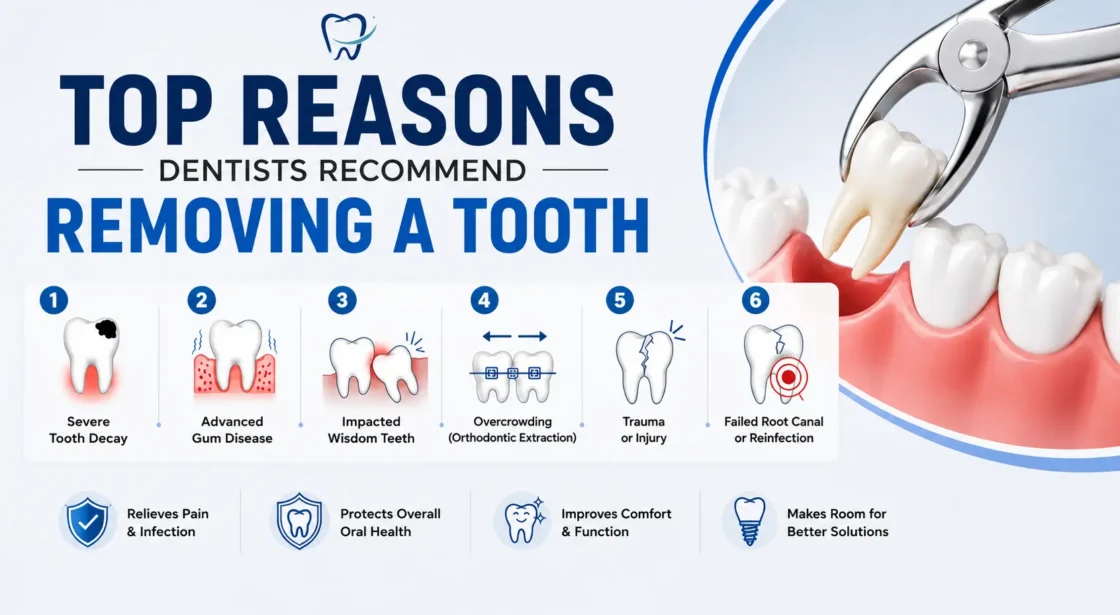
Most dentists try every option to save your natural tooth first. But sometimes, extraction is the healthiest choice. Here are the most common reasons.
1. Severe Tooth Decay
When a cavity reaches deep into the pulp, and the tooth structure is too weak to support a filling or crown, removal becomes necessary. A decayed tooth that's left untreated can spread infection to nearby teeth and even your jawbone.
2. Advanced Gum Disease (Periodontitis)
Gum disease is the leading cause of tooth loss in adults. When periodontitis destroys the bone holding your tooth in place, the tooth becomes loose and painful. Extraction stops the infection from spreading.
3. Impacted Wisdom Teeth
Wisdom teeth often don't have enough room to grow properly. An impacted wisdom tooth can push against neighbouring teeth, cause pain, swelling, or repeated infections. Wisdom tooth removal in Northville is one of the most requested procedures at our clinic.
4. Overcrowding (Orthodontic Extraction)
Sometimes, your orthodontist may recommend pulling one or two teeth before braces or Invisalign. This creates space for proper alignment and a straighter smile.
5. Trauma or Injury
A sports accident, fall, or car crash can crack a tooth beyond repair. If the root is fractured or the crown is shattered, extraction is often the safest fix.
6. Failed Root Canal or Reinfection
In some cases, a previously treated tooth gets reinfected. When a second root canal isn't an option, removing the tooth and replacing it with a dental implant restores both function and appearance.
Simple vs. Surgical Tooth Extraction
Feature | Simple Extraction | Surgical Extraction |
Tooth condition | Fully visible above the gumline | Broken, impacted, or below the gum line |
Anesthesia | Local numbing | Local + sedation (if needed) |
Procedure time | 15–30 minutes | 30–60 minutes |
Common use | Loose or decayed teeth | Wisdom teeth, broken roots |
Recovery | 3–5 days | 1–2 weeks |
Stitches needed | Rarely | Usually yes |
Your dentist in Northville, MI, will examine your X-rays and recommend the right type for your situation.
What to Expect During a Tooth Extraction at Elite Smile Family Dentistry
We focus on making your visit calm, painless, and quick. Here's what your appointment looks like, step by step.
- Consultation & X-ray - We examine the tooth and surrounding bone.
- Local anaesthesia - The area is fully numbed so you feel no pain.
- Gentle removal - Using modern tools, the tooth is loosened and removed.
- Cleaning the socket - We clean and shape the socket for healthy healing.
- Stitches (if needed) - Dissolvable sutures close the area.
- Aftercare instructions - You go home with clear, easy-to-follow guidance.
Most patients tell us the procedure was much easier than they expected.
Recovery & Aftercare Tips
Healing after a tooth extraction takes a few days to two weeks, depending on the type. Following these tips speeds up tooth removal recovery and prevents complications like dry socket.
Do this:
- Bite gently on gauze for 30–45 minutes to stop bleeding
- Use a cold compress on your cheek to reduce swelling
- Eat soft foods like yoghurt, mashed potatoes, smoothies, and soup
- Take prescribed pain relievers as directed
- Rinse gently with warm salt water after 24 hours
Avoid this for at least 72 hours:
- Smoking or vaping (a major cause of dry socket)
- Drinking through a straw
- Hot drinks or spicy food
- Vigorous brushing near the site
- Heavy exercise or lifting
Most patients return to normal activities within 2–3 days.
When Should You See a Dentist Immediately?
Some tooth problems can't wait. Call a Northville dentist right away if you experience:
- Severe, throbbing pain that pain relievers don't ease
- Facial swelling or fever
- A broken or knocked-out tooth from an accident
- Pus or a bad taste in your mouth (sign of infection)
- Bleeding that won't stop after 24 hours of extraction
Emergency tooth extraction in Northville is available at Elite Smile Family Dentistry. Quick action can save your health and prevent the infection from spreading.
Cost of Tooth Extraction in Northville, MI
The cost of tooth extraction depends on the type, location, and whether you have dental insurance. Here's a general price range for the Northville area.
Type of Extraction | Average Cost (Without Insurance) |
Simple Extraction | $150 – $300 per tooth |
Surgical Extraction | $300 – $650 per tooth |
Wisdom Tooth Removal (per tooth) | $250 – $700 |
Full Mouth (4 wisdom teeth) | $1,000 – $3,000 |
Emergency Extraction | $200 – $750 |
Most dental insurance plans cover 50%–80% of the procedure. We also offer flexible payment plans to make an affordable tooth extraction near you stress-free.
Call 734-446-6440 for a personalised quote.
Don't Wait Until the Pain Gets Worse
A damaged tooth won't fix itself. The longer you wait, the higher the risk of infection, bone loss, and bigger dental bills. At Elite Smile Family Dentistry, our caring team makes tooth extraction in Northville smooth, gentle, and stress-free from your first call to your final follow-up.
Whether you need a routine extraction, emergency care, or wisdom tooth removal, we're here to help your family smile with confidence again.
Book Your Appointment Today
Elite Smile Family Dentistry, Northville, MI, Schedule your consultation, Serving Northville, Plymouth, Novi & surrounding areas, Same-day emergency appointments available
Frequently Asked Questions
Does tooth extraction hurt?
No, tooth extraction itself is not painful. Your dentist numbs the area with local anesthesia so you feel only gentle pressure during the procedure. Mild soreness for 2–3 days afterward is normal and easily managed with over-the-counter pain relievers.
How long does it take to heal after a tooth extraction?
Most people heal from a simple tooth extraction in 7 to 10 days. Surgical extractions, including wisdom teeth, may take up to two weeks for full gum healing. Complete bone healing inside the socket can take 3 to 6 months.
What can I eat after a tooth extraction?
Stick to soft, cool foods for the first 24–48 hours. Good options include yogurt, smoothies (no straws), mashed potatoes, scrambled eggs, applesauce, soup, and oatmeal. Avoid crunchy, spicy, hot, or sticky foods until the socket fully closes.
When is tooth extraction necessary?
A tooth extraction becomes necessary when a tooth can't be saved by fillings, crowns, or root canals. Common situations include severe decay, advanced gum disease, impacted wisdom teeth, severe infection, dental trauma, or overcrowding requiring orthodontic treatment.
Can I drive home after a tooth extraction?
Yes, you can drive home after a simple extraction with local anesthesia. However, if you had sedation or surgical extraction, you'll need someone to drive you home. We always confirm this during your consultation in Northville.
What is dry socket, and how do I prevent it?
Dry socket happens when the protective blood clot dislodges from the extraction site, exposing the bone. To prevent it, avoid smoking, drinking through straws, and vigorous rinsing for at least 72 hours after your extraction.
Should I replace a missing tooth after extraction?
Yes, replacing a missing tooth is highly recommended. Without replacement, nearby teeth can shift, your bite alignment can change, and jawbone density may decrease. Dental implants, bridges, or partial dentures are excellent options after extraction.