
Why Do I Have Bad Breath Even After Brushing? Causes & Solutions
You brush your teeth every day, floss regularly, and may even use mouthwash, but your breath still doesn't feel fresh. Bad breath even after brushing can be frustrating, especially when you're doing your best to maintain good oral hygiene.
While certain foods or morning breath can cause temporary odor, persistent bad breath may have an underlying oral-health cause. Plaque and tartar buildup, bacteria on the tongue, gum problems, dry mouth, and other factors can all contribute to unpleasant breath.
The good news is that identifying the cause is often the first step toward improving it. If your bad breath continues despite good at-home care, a dental examination can help determine what's contributing to the problem.
At our Northville, MI office, Dr. Tosha Patel and our hygiene team focus on removing the plaque, tartar, and surface stains that brushing and flossing at home simply can't reach.
Why Does My Breath Still Smell After Brushing?
Bad breath can persist after brushing when odor-causing bacteria, plaque, tartar, gum problems, dry mouth, or other factors are present. Brushing cleans tooth surfaces but may not remove hardened tartar or bacteria from every area of the mouth. If bad breath continues, a dentist can help identify the cause.
Key Takeaways
- Brushing alone may not eliminate every source of bad breath.
- Plaque and hardened tartar can contribute to unpleasant odors.
- Bacteria can accumulate on the tongue and between teeth.
- Gum disease can cause persistent bad breath.
- Dry mouth can make bad breath more noticeable.
- Professional teeth cleaning can remove plaque, tartar, and some surface buildup.
- Persistent bad breath deserves a dental evaluation rather than simply being covered with mouthwash.
1. Plaque and Tartar Buildup
One of the most common oral-health reasons for persistent bad breath is plaque buildup.
Plaque is a sticky film of bacteria that develops on teeth and along the gumline. Regular brushing and flossing help control plaque, but if plaque remains in hard-to-reach areas, it can contribute to odor and other oral-health problems.
Over time, plaque can harden into tartar, also called dental calculus. Unlike soft plaque, hardened tartar cannot simply be brushed away at home.
Professional teeth cleaning uses specialized instruments to remove plaque and tartar from tooth surfaces and along the gumline. Scaling is one of the first things we do during your cleaning here, using specialized instruments to lift plaque and tartar off the tooth surface and gumline.
If you have persistent bad breath despite brushing, professional cleaning may be an important part of addressing the problem when plaque or tartar is contributing to it.
2. Your Tongue May Be Holding Odor-Causing Bacteria
Your teeth aren't the only surfaces in your mouth where bacteria can accumulate.
The tongue has a textured surface that can collect bacteria, food particles, and other debris. If you brush your teeth but rarely clean your tongue, some odor-producing bacteria may remain.
What can you do?
As part of your daily oral-hygiene routine:
- Gently brush your tongue.
- Consider using a tongue scraper if your dentist recommends one.
- Brush your teeth twice daily.
- Clean between your teeth regularly.
- Drink water throughout the day.
Be gentle when cleaning your tongue. Scrubbing aggressively isn't necessary and can irritate the tissue.
3. Gum Disease May Be Contributing to Bad Breath
Persistent bad breath can sometimes be associated with gum disease.
Gum disease begins with bacterial plaque accumulating around the gums. Early gum inflammation, known as gingivitis, may cause symptoms such as red, swollen, or bleeding gums. If gum disease progresses, deeper areas around the teeth can become affected.
Bad breath may be one of the signs that your gums need attention.
If you notice:
- Bleeding gums
- Swollen gums
- Red or tender gums
- Persistent bad breath
- A bad taste in your mouth
- Changes around your teeth
It's worth discussing these symptoms with your dentist.
Regular professional cleanings are part of preventive dental care and can help remove buildup that contributes to gum problems. During your visit, Dr. Patel and our hygienists also check for early signs of gum inflammation, since catching it early makes a real difference in preventing gingivitis from progressing further.
4. You May Have Dry Mouth
Dry mouth, or reduced saliva flow, can also contribute to bad breath.
Saliva naturally helps keep the mouth moist and assists in clearing food particles and bacteria. When your mouth becomes dry, odor-causing substances may remain in the mouth longer.
Dry mouth can occur for a variety of reasons, including dehydration, certain medications, mouth breathing, or other health-related factors.
If you frequently wake up with a very dry mouth or experience persistent dryness throughout the day, mention it to your dentist.
Simple habits that may help
- Drink water regularly.
- Avoid excessive alcohol.
- Limit tobacco use.
- Chew sugar-free gum when appropriate to stimulate saliva.
- Discuss persistent dry mouth with your dental professional.
5. Food Can Cause Temporary Bad Breath
Some foods naturally contain compounds that can affect breath odor.
Common examples include:
- Garlic
- Onions
- Certain spices
- Strong-flavored foods
- Coffee
This type of bad breath is usually temporary.
If you notice that your breath smells different shortly after eating certain foods but returns to normal afterward, food may be the primary factor.
However, if your breath remains unpleasant long after eating, or the problem occurs regardless of what you eat, it may be worth looking for an underlying oral-health cause.
6. You May Not Be Cleaning Between Your Teeth Effectively
Even excellent brushing doesn't clean every surface between your teeth.
Food particles and plaque can remain between teeth when those areas aren't cleaned regularly. Over time, this buildup can contribute to both gum problems and unpleasant breath.
Try to clean between your teeth every day using a method that's appropriate for your mouth, such as dental floss or an interdental cleaner.
If you're unsure about the best technique, ask your dental team to demonstrate it during your next appointment.
7. Mouthwash May Only Be Masking the Problem
Mouthwash can make your breath feel fresher, but it doesn't necessarily address the underlying cause of persistent bad breath.
If plaque, tartar, gum inflammation, or another dental issue is responsible, simply covering the odor with a minty rinse won't solve the source.
Think of mouthwash as one possible part of an oral-hygiene routine, not necessarily the complete solution.
If you're repeatedly using mouthwash but still experiencing bad breath, consider talking with your dentist.
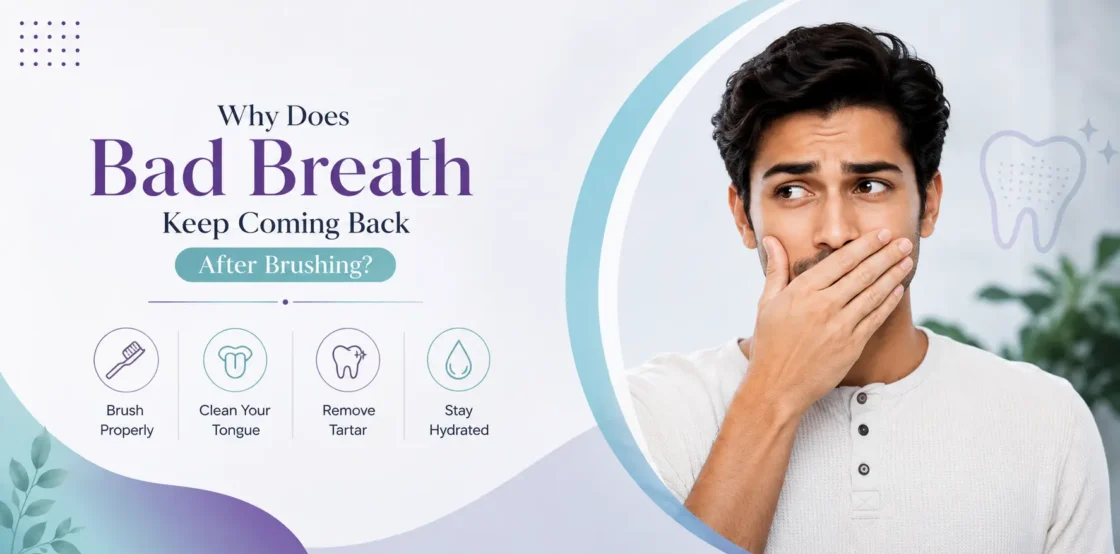
8. Why Does Bad Breath Keep Coming Back After Brushing?
If your bad breath repeatedly returns shortly after brushing, consider whether you're addressing all areas of your mouth.
Ask yourself:
- Am I cleaning between my teeth every day?
- Do I clean my tongue?
- Do I have visible tartar?
- Do my gums bleed when I brush or floss?
- Do I have persistent dry mouth?
- Have I had a professional dental cleaning recently?
- Is the odor present throughout the day?
If you answered yes to several of these questions, a dental examination may help identify what's contributing to the problem.
Can Professional Teeth Cleaning Help With Bad Breath?
Professional teeth cleaning can help when plaque, tartar, surface buildup, or related gum problems are contributing to bad breath.
During a professional cleaning, a dental hygienist can examine your mouth and remove plaque and tartar using specialized instruments. The process may include scaling, polishing, flossing, and, when appropriate, fluoride treatment.
When you come in for a cleaning with us, Dr. Tosha Patel starts with a quick examination, then our hygienists move through scaling, polishing, and flossing, with fluoride treatment added when it's needed.
However, teeth cleaning isn't a universal treatment for every cause of bad breath. If the odor continues after your oral health has been addressed, your dentist may recommend looking for other possible causes.
How to Prevent Bad Breath Between Dental Visits
Good daily habits can help keep your mouth cleaner and your breath fresher.
Follow this simple checklist:
- Brush your teeth twice a day.
- Clean between your teeth daily.
- Gently clean your tongue.
- Drink enough water.
- Avoid tobacco products.
- Limit foods that consistently trigger unpleasant breath.
- Replace your toothbrush or brush head regularly.
- Keep up with professional dental cleanings.
- Pay attention to bleeding, swelling, or other gum changes.
Remember that professional cleaning complements, not replaces, your daily oral-hygiene routine.
When Should You See a Dentist About Bad Breath?
Occasional bad breath isn't usually a reason to panic. But if the problem persists despite consistent brushing and flossing, it's worth discussing with a dentist.
Schedule an evaluation if you also have:
- Bleeding or swollen gums
- Persistent bad taste
- Tooth pain
- Loose teeth
- Significant plaque or tartar buildup
- Dry mouth that doesn't improve
- Changes in your gums
- Bad breath that doesn't improve with better oral hygiene
A dentist can examine your teeth and gums and help determine whether an oral-health issue is contributing to the odor.
At Elite Smile Family Dentistry: How We Can Help
If you're dealing with bad breath even after brushing, you don't have to keep guessing which product might finally fix it.
Come see us at our Northville, MI office. Dr. Patel and our team will examine your teeth and gums, then walk you through scaling, polishing, and flossing to clear out whatever's causing the buildup.
If plaque, tartar, or gum-related problems are contributing to your bad breath, addressing your oral health may be an important part of improving the problem.
If your bad breath persists, schedule an appointment so our team can evaluate your teeth, gums, and overall oral health.
Final Thoughts
If you've been asking yourself, "Why do I have bad breath even after brushing?", the answer may be more than simply needing a stronger mouthwash.
Plaque and tartar buildup, bacteria on the tongue, gum problems, dry mouth, food, and other factors can contribute to persistent bad breath. Good daily oral hygiene is essential, but it may not be enough to remove hardened tartar or identify an underlying dental problem.
If your bad breath continues despite brushing and flossing, a professional dental evaluation is a sensible next step.
Looking for Professional Teeth Cleaning in Northville, MI?
We provide thorough, gentle professional teeth cleaning in Northville to help remove plaque, tartar, and surface stains while supporting healthy teeth and gums.
Schedule your teeth-cleaning appointment and talk with our dental team about persistent bad breath.
Frequently Asked Questions
Why do I have bad breath even after brushing?
Bad breath can persist after brushing because brushing doesn't remove every source of odor. Plaque, tartar, bacteria on the tongue, gum problems, dry mouth, and certain foods can all contribute. If your breath remains unpleasant despite good oral hygiene, a dental evaluation can help identify the underlying cause.
Why does my breath smell bad even after brushing and flossing?
If you're brushing and flossing consistently but still have persistent bad breath, plaque or tartar buildup, gum problems, tongue bacteria, dry mouth, or another factor may be involved. A professional dental examination can help determine what's causing the problem.
Can a dental cleaning get rid of bad breath?
A professional cleaning can help if plaque, tartar, or related gum problems are contributing to bad breath. Cleaning removes hardened buildup that cannot be removed through ordinary brushing and flossing. However, persistent bad breath can have multiple causes, so additional evaluation may sometimes be necessary.
Does tartar cause bad breath?
Tartar can contribute to an environment where bacteria accumulate around the teeth and gums, which may contribute to unpleasant breath. Because hardened tartar cannot be removed effectively with a toothbrush, professional dental cleaning may be necessary to remove it.
Can gum disease cause bad breath?
Yes, gum problems can be associated with persistent bad breath or an unpleasant taste. If you have bad breath along with bleeding, swollen, or tender gums, schedule a dental evaluation so your gums can be assessed.
How can I get rid of bad breath naturally?
Start with good oral hygiene: brush twice daily, clean between your teeth, gently clean your tongue, drink enough water, and avoid tobacco. If bad breath persists despite these habits, don't rely only on home remedies. A dentist can help determine whether an oral-health problem is contributing.
Why do I have bad breath in the morning?
Morning breath is common because saliva production can decrease while you sleep, allowing bacteria and odor-producing compounds to accumulate. Drinking water and cleaning your teeth and tongue can help. If strong bad breath persists throughout the day, talk to your dentist.
How often should I get my teeth professionally cleaned?
The appropriate cleaning schedule varies from person to person. Your dentist may recommend a frequency based on your oral health needs, gum health, plaque and tartar buildup, and other risk factors. Hardened plaque and tartar cannot be removed by brushing and flossing alone, which is why regular professional cleanings matter.