
Partial Denture Dentistry in Northville: Types, Cost, and What to Expect
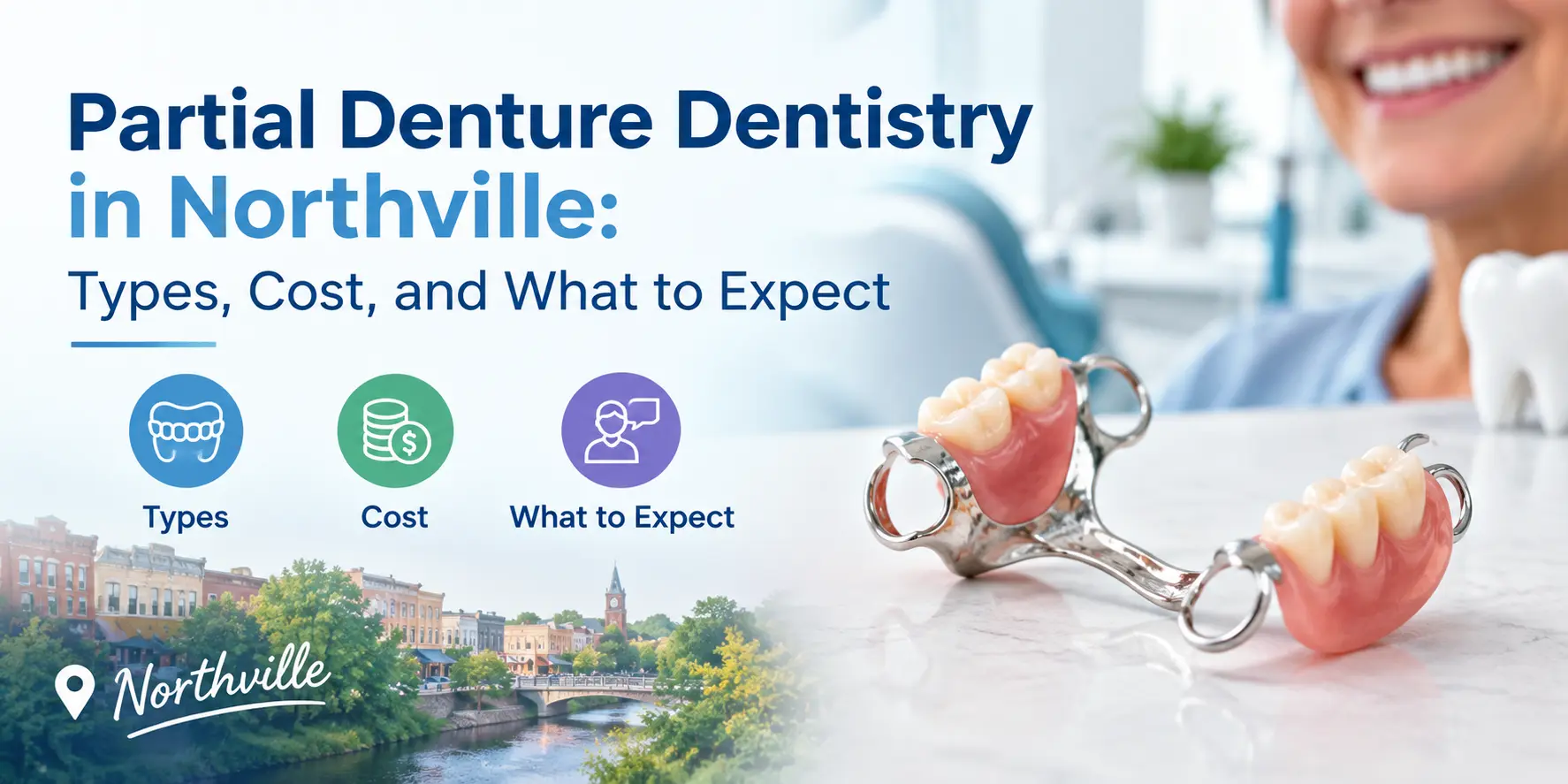
Missing one or more teeth changes more than just your smile. It affects how you chew, how you speak, and even how the rest of your teeth sit in your mouth over time. A partial denture is one of the most established, well-researched solutions for replacing missing teeth without surgery, and it remains one of the most requested restorative treatments at dental practices across Northville and the wider Michigan area.
This guide breaks down what partial denture dentistry actually involves: the types available, how the process works, what affects the cost, and how to know if a partial denture is the right choice for your mouth.
What Is a Partial Denture?
A partial denture is a removable dental appliance designed to replace one or more missing teeth when some natural teeth are still present in the jaw. Unlike a complete denture, which replaces an entire arch of teeth, a partial denture fills the gaps while working around your remaining healthy teeth.
It typically consists of replacement teeth attached to a gum-colored base, held in place with a metal framework or clasps that anchor to your existing teeth. You can learn more about how this fits into the full range of denture options on our partials and dentures page.
Partial dentures serve three core purposes:
- Restoring chewing function so you can eat a full range of foods comfortably
- Preventing surrounding teeth from shifting into the empty space, which can lead to bite problems
- Supporting facial structure and speech, since gaps in your teeth can affect both
Types of Partial Dentures Available Today
Not all partial dentures are built the same way. The right type for you depends on your oral health, the number of missing teeth, your budget, and your long-term goals.
Cast Metal Partial Dentures
This is the traditional and most durable option. It uses a rigid metal framework, usually cobalt-chromium, that provides excellent stability and a precise fit. Cast metal partials tend to last longer than other removable options and distribute chewing force evenly.
Acrylic (Flipper) Partial Dentures
An acrylic partial, sometimes called a flipper, uses a plastic base and is generally the most affordable option. It's often used as a temporary solution, for example, while you're waiting for an implant to heal, though some patients use it long-term.
Flexible Partial Dentures
Made from a thin, flexible thermoplastic material, these partials bend slightly with the natural movement of your mouth and don't rely on visible metal clasps, which makes them a popular cosmetic choice. They tend to be more comfortable for many patients, though they may not offer the same rigidity as a cast metal framework.
Implant-Supported Partial Dentures
For patients who want a more permanent, stable solution, a partial denture can be anchored to one or more dental implants rather than relying solely on clasps around natural teeth. This reduces movement and can feel closer to natural teeth, though it involves a surgical component and a longer treatment timeline.
How the Partial Denture Process Works
Getting a partial denture isn't a single-visit procedure. It's a process built around getting a precise, comfortable fit:
Step 1: Comprehensive Exam and Consultation. Your dentist evaluates your remaining teeth, gum health, and jaw structure, often with the help of X-rays, to determine which type of partial denture suits your case.
Step 2: Impressions and Measurements. Detailed impressions of your upper and/or lower arch are taken to design a partial that fits precisely around your existing teeth.
Step 3: Framework and Fitting. A custom framework is fabricated in a dental lab based on your impressions, then tried in to check fit, bite alignment, and comfort before final adjustments.
Step 4: Final Placement. Once the fit is confirmed, the finished partial denture is placed, and your dentist walks you through how to insert, remove, and care for it.
Step 5: Follow-Up Adjustments. It's common to need one or two follow-up visits in the weeks after placement as your gums and cheek muscles adjust to the new appliance.
What Affects the Cost of a Partial Denture?
Partial denture pricing varies from patient to patient because several factors influence the final cost:
- Material type (acrylic is generally less expensive than cast metal or flexible options)
- Number of teeth being replaced
- Whether implants are involved in an implant-supported design
- Need for additional procedures first, such as extractions or gum treatment
- Insurance coverage, which varies significantly by plan
Because pricing depends on your specific situation, the most accurate way to get a number is through an in-person consultation and exam rather than a generic estimate found online.
Signs a Partial Denture Might Be Right for You
A partial denture may be worth discussing with your dentist if you notice:
- One or more missing teeth that are affecting how you chew or speak
- Remaining teeth that have started to shift or tilt into an empty space
- A desire for a non-surgical alternative to a bridge or implant
- Loose spots in your bite that make certain foods difficult to eat
- A previous partial denture that no longer fits comfortably
Caring for Your Partial Denture
A well-maintained partial denture can last for many years with the right daily habits:
- Remove and rinse it after eating to clear away food particles
- Brush it daily with a denture-specific brush and cleanser, not regular toothpaste, which can be abrasive
- Soak it overnight in a denture-cleaning solution to keep the material from drying out or warping
- Continue brushing your natural teeth and gums thoroughly, since the health of your remaining teeth directly affects how well the partial fits
- Schedule regular dental checkups so your dentist can monitor fit and catch any adjustments needed early.
Why Choose a Local Northville Dental Team for Your Partial Denture
Partial dentures require precise measurements and a fit that's checked and refined in person, which makes working with an experienced local dental team an important part of getting a comfortable, functional result. At Elite Smile Family Dentistry, our team takes the time to evaluate your bite, remaining teeth, and long-term goals before recommending a specific type of partial denture, rather than offering a one-size-fits-all solution.
The Bottom Line
Partial denture dentistry offers a proven, non-surgical way to restore missing teeth, protect your remaining natural teeth, and get your bite and confidence back. With several material options available today, from traditional cast metal to flexible and implant-supported designs, there's likely a solution that fits both your mouth and your budget.
Ready to find out which type of partial denture is right for you? Schedule a consultation with our Northville team today, or call us at 734-446-6440.
Frequently Asked Questions
How long does it take to get a partial denture?
The full process, from initial consultation to final placement, typically takes a few weeks, since custom impressions and lab fabrication take time to complete accurately.
Can I sleep with my partial denture in?
Most dentists recommend removing your partial denture at night to give your gums and tissue a chance to rest and to reduce the risk of bacterial buildup.
Will a partial denture feel natural right away?
It's normal to need a short adjustment period as your mouth gets used to the appliance. Most patients adapt within a couple of weeks.
How is a partial denture different from a dental bridge?
A partial denture is removable and doesn't require altering adjacent teeth, while a bridge is fixed in place and typically involves reshaping neighboring teeth to support it.