
Is Nitrous Oxide Safe at the Dentist? What to Expect Before Your Visit
For many people, the hardest part of a dental visit isn't the procedure itself. It's the worry that comes before it. The sound of the drill, the fear of discomfort, or a bad experience from the past can be enough to keep someone from booking an appointment for years.
Nitrous oxide, often called laughing gas, is one of the most widely used and best-studied ways to help anxious patients relax in the dental chair. If you've been wondering whether it's safe, how it feels, and whether it's right for you, this guide covers what you need to know before your visit.
What Is Nitrous Oxide?
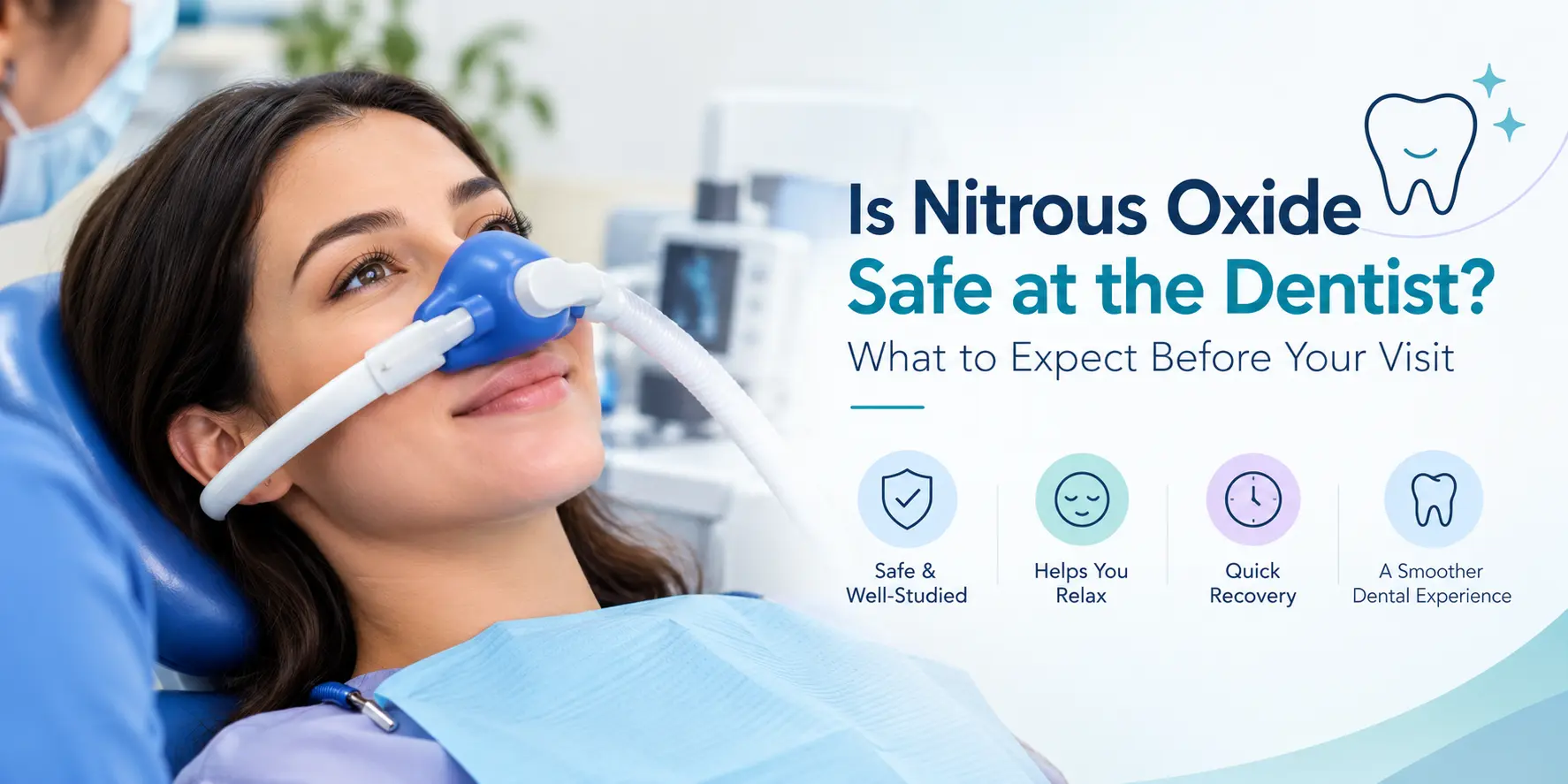
Nitrous oxide is a colorless gas that is mixed with oxygen and delivered through a small mask that fits over your nose. It's a form of minimal sedation, which means you stay awake, aware, and able to respond to your dentist, but you feel calm, relaxed, and far less anxious.
It has been used in dentistry for well over a century and remains a standard option in dental offices because it works quickly, is easy to adjust, and wears off fast. You can learn more about how we use it on our nitrous oxide dentistry page.
Is Nitrous Oxide Safe at the Dentist?
For most healthy patients, yes. Nitrous oxide is considered one of the safest forms of dental sedation when it is administered by a trained dental professional. Several things contribute to its strong safety record:
Oxygen is always delivered with it
The gas is blended with oxygen throughout your visit, so you're never breathing nitrous oxide alone.
The dose is adjustable in real time
Your dentist can increase or decrease the amount based on how you're feeling at any moment.
It leaves the body quickly
At the end of your appointment, you breathe pure oxygen for a few minutes, which clears the gas from your system.
You remain conscious and responsive
Unlike deeper forms of sedation, you can still breathe on your own and communicate with your dental team.
That said, safety always depends on your individual health history, which is why a short medical review happens before nitrous oxide is used.
How Does Nitrous Oxide Feel?
Most patients describe a mild, pleasant sensation within a few minutes of starting the gas. Common experiences include:
- A feeling of warmth or lightness in the body
- Tingling in the arms and legs
- A calm, floating sense of relaxation
- Feeling less aware of time passing
- Reduced awareness of discomfort and noise
You won't be asleep, and you'll still be able to follow instructions from your dentist. Many patients simply feel like they're relaxed and not bothered by what's happening around them.
Who Is Nitrous Oxide a Good Fit For?
Nitrous oxide can be a helpful option for:
- Patients with dental anxiety or dental fear, including those who have avoided care for a long time
- People with a strong gag reflex, since the relaxed state can make procedures easier to tolerate
- Patients undergoing longer or more involved procedures, such as a root canal or a tooth extraction
- Children and teens who are nervous about dental visits, when appropriate and recommended by the dentist
- Anyone who simply prefers a more relaxed experience, even for routine care
Who Should Be Cautious or Avoid It?
Nitrous oxide isn't right for everyone. Your dentist may recommend a different approach if you:
- Have significant respiratory conditions, such as severe COPD, that affect how you breathe
- Are in the early stages of pregnancy (always discuss this with both your dentist and your doctor first)
- Have certain vitamin B12 deficiencies or related metabolic conditions
- Have a cold, congestion, or any condition that makes it hard to breathe through your nose
- Take certain medications that could interact with sedation
- Have a history of specific psychiatric conditions, which your dentist should be aware of
This is why an honest, complete health history matters. Telling your dental team about your medical conditions, medications, and any previous reactions to sedation allows them to make the safest recommendation for you.
What Are the Possible Side Effects?
Side effects are usually mild and short-lived. The most commonly reported ones include:
- Nausea, especially if the gas level is too high or you've eaten a heavy meal beforehand
- Dizziness or lightheadedness
- Sweating
- Headache after the appointment, in some cases
- Feeling tired or a bit drowsy
These typically resolve quickly once the gas is turned off and you've breathed pure oxygen. If you feel uncomfortable at any point during treatment, you can tell your dentist right away and the level can be adjusted.
What to Expect at Your Visit
Knowing what the process looks like can take a lot of the uncertainty out of it.
Before your appointment
Your dentist reviews your health history and confirms nitrous oxide is appropriate. It's usually best to avoid a large meal right beforehand to reduce the chance of nausea.
Getting started
A small mask is placed over your nose, and you breathe normally. Within a few minutes, you'll begin to feel relaxed.
During treatment
Your dentist continues your procedure while monitoring how you're feeling. You'll stay awake and responsive throughout.
Afterward
The gas is turned off, and you breathe pure oxygen for several minutes to clear it from your system. Most patients feel back to normal shortly after and, in most cases, are able to resume regular daily activities, including driving, though your dentist will confirm this based on your situation.
Nitrous Oxide vs. Other Types of Sedation
Type | Level | Awake? | Recovery |
Nitrous Oxide | Minimal | Yes | Quick, usually within minutes |
Oral Sedation | Minimal to moderate | Usually | Several hours, needs a driver |
IV Sedation | Moderate to deep | Drowsy or semi-conscious | Longer, needs a driver |
General Anesthesia | Deep | No | Longest, needs a driver and monitoring |
For many patients, nitrous oxide offers a good balance: enough relaxation to ease anxiety, with the fastest recovery and the least disruption to the rest of their day.
Tips for Managing Dental Anxiety Beyond Sedation
Nitrous oxide works best when combined with a few simple habits:
Tell your dentist about your fears
A good dental team will adjust their approach, pace, and communication to help you feel in control.
Agree on a stop signal
A raised hand is a simple way to pause treatment any time you need a break.
Schedule at a calm time of day
Choose a time when you're less likely to feel rushed or stressed.
Start with a simple visit
A routine teeth cleaning can be a gentle way to rebuild comfort with dental care.
Practice slow breathing
Slow, deep breaths before and during treatment can help calm the nervous system.
The Bottom Line
For most healthy patients, nitrous oxide is a safe, well-established, and effective way to make dental care more comfortable. It works fast, wears off quickly, and lets you stay awake and in control while feeling noticeably more at ease.
If dental anxiety has kept you from the care you need, you don't have to push through it alone. At Elite Smile Family Dentistry, our team takes the time to understand your concerns, review your health history, and recommend the most comfortable approach for you.
Ready to make your next dental visit more relaxed? Schedule an appointment with our Northville team today, or call us at 734-446-6440.
Frequently Asked Questions
Is nitrous oxide safe for children?
Nitrous oxide is commonly used for children who feel nervous about dental treatment, and it's generally considered safe when administered by a trained professional. Your dentist will determine whether it's appropriate based on your child's age, health history, and the procedure being done.
Will I be asleep with nitrous oxide?
In many cases, yes. Patients often start with a partial denture and transition to implants later if their needs, budget, or priorities change, though this depends on individual bone health and oral conditions.
How long does it take to wear off?
Most of the effects fade within minutes once you begin breathing pure oxygen at the end of your appointment.
Can I drive after nitrous oxide?
In most cases, patients feel normal shortly after treatment and can drive. Your dentist will confirm this based on how you feel, and it's always worth asking before your appointment.
Does nitrous oxide numb the area being treated?
Nitrous oxide helps you relax and reduces discomfort, but it isn't a replacement for local anesthetic. For procedures that require numbing, your dentist may use both together.
Is nitrous oxide covered by insurance?
Coverage varies by plan and procedure. Our front desk team can help you understand what your plan may cover before your visit.