
Dental Sealants for Kids: What They Are and When to Get Them
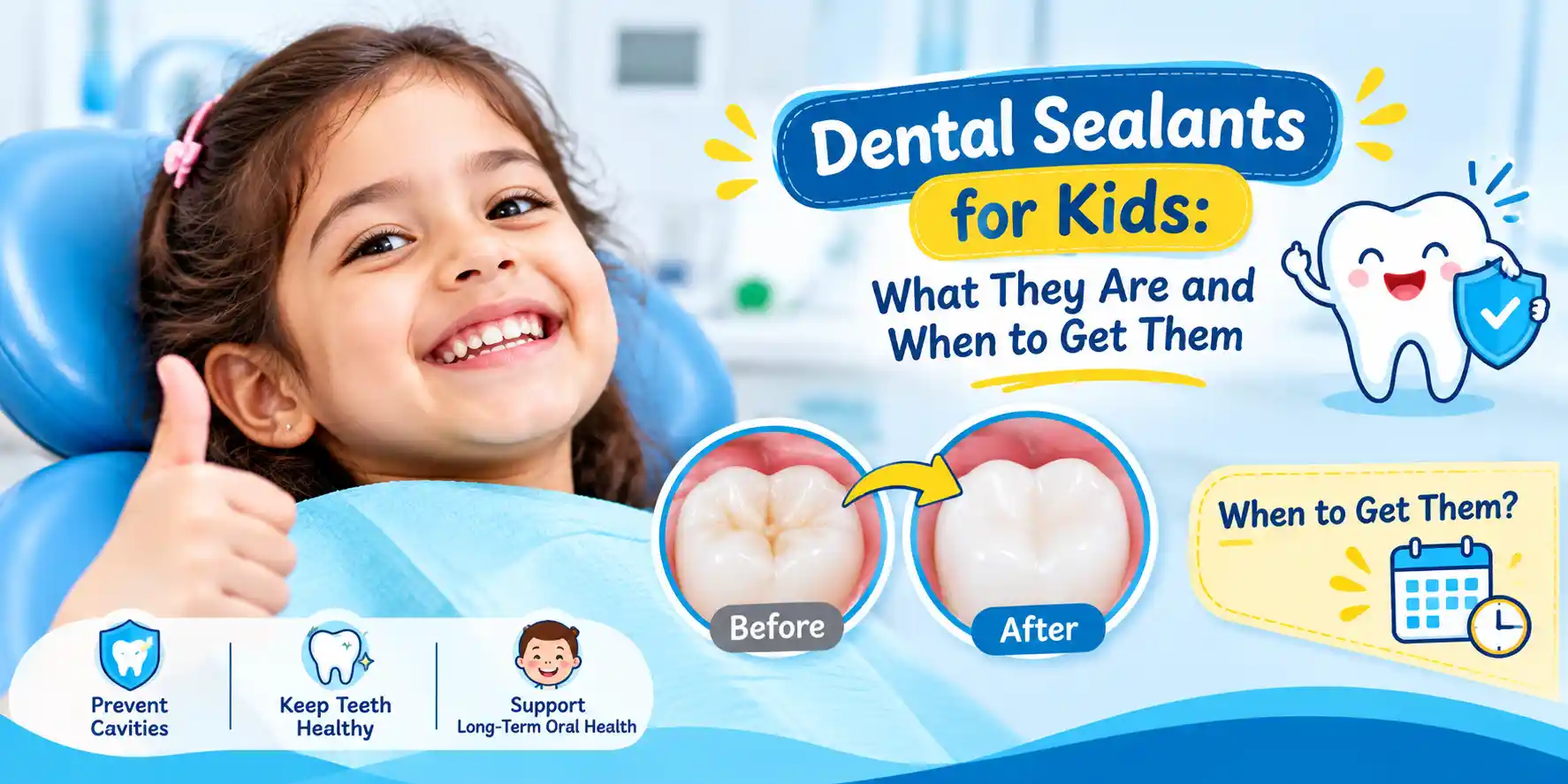
Children's back teeth have deep grooves that a toothbrush simply cannot reach well. Food and bacteria settle in those grooves, and cavities often start there. Dental sealants for kids are a simple, quick way to protect those chewing surfaces before decay has a chance to begin.
If you have heard your dentist mention sealants and wondered what they are, whether they are safe, and when your child should get them, this guide walks you through the basics. For an overview of the preventive care we offer, see our preventive dentistry page.
What Are Dental Sealants?
A dental sealant is a thin protective coating, made from dental materials, that bonds to the chewing surface of a back tooth. According to the American Dental Association's MouthHealthy site, molar teeth have deep grooves, which makes them a common place for food and bacteria to collect.
The sealant fills in those pits and grooves and creates a smooth, easier-to-clean surface. Think of it as a shield over the part of the tooth that is hardest to brush.
Why Dental Sealants for Kids Matter
Kids are good candidates for sealants for a few reasons:
- Permanent molars come in early. They erupt while children are still learning to brush well, so deep grooves are harder for kids to keep clean.
- Brushing alone does not reach everything. Bristles are often too wide to clean the bottom of a narrow groove.
- Prevention is easier than repair. Protecting a healthy tooth is simpler than treating a cavity later. If you want to know what treatment looks like once decay has started, read our guide to kids dental fillings.
Children's dental experts, including the American Academy of Pediatrics' HealthyChildren.org, note that kids and teens are the main candidates because the risk of decay in these pits and grooves starts early in life. Adults can benefit too.
When Should Kids Get Sealants?
The ADA's MouthHealthy site explains that the first permanent molars typically come in around age 6, and the second molars around age 12. Sealing a molar soon after it fully comes in gives it protection during the years when cavities are most likely to start. The earlier a sealant is placed, the better.
That said, timing is not one size fits all. Your dentist looks at which teeth have come in, how deep the grooves are, and your child's cavity risk before recommending sealants. Not every child needs them on every tooth, and a dentist can tell you whether dental sealants for kids make sense for your child at their next checkup.
How Are Sealants Placed?
Getting dental sealants for kids is typically quick and does not involve drilling or numbing. According to MouthHealthy, the steps are:
- The tooth is cleaned and dried.
- A gel is placed on the chewing surface to roughen it slightly so the sealant bonds well.
- The gel is rinsed off and the tooth is dried again.
- The sealant is painted onto the grooves of the tooth.
- A special blue light hardens the sealant.
For a child who gets nervous in the dental chair, this is a gentle procedure, and knowing the steps ahead of time can help. Our blog on making dental visits comfortable for kids has tips for easing worries.
Do Dental Sealants for Kids Really Prevent Cavities?
Yes, as long as the sealant stays in place. Figures reported from the Centers for Disease Control and Prevention (CDC) indicate that sealants prevent about 80 percent of cavities in the first two years after they are placed, and about 50 percent for up to four years.
The CDC also reports that school-age children without sealants have almost three times more cavities than children with them.
These are population-level figures, so your child's own results depend on how well the sealant stays on and how well the rest of their teeth are cared for. This is why sealants are used alongside, not instead of, good habits.
How Long Do Dental Sealants for Kids Last?
Sealants hold up well under normal chewing and often last several years, according to both MouthHealthy and HealthyChildren.org. The CDC has reported they can stay in place for up to nine years.
They do not last forever. A sealant can wear down, chip or come off, especially if your child chews ice or hard candy. At regular checkups your dentist looks at each sealant and repairs or reapplies it when needed, which is one more reason to keep up with routine exams.
Are Dental Sealants for Kids Safe?
Dental sealants for kids have a long record of use in children's dentistry. MouthHealthy lists no known side effects other than a possible allergy to the material. Some parents ask about BPA, a chemical that can be present in small amounts in some dental materials. The ADA's MouthHealthy page states that sealants contain only a tiny amount of BPA, not enough to cause harm, and notes that everyday exposures such as receipts and dust contribute more.
If you have any concerns about materials, allergies or your child's health history, tell your dentist before the appointment. They can explain what is being used and answer your questions.
Sealants Are Not a Replacement for Daily Care
A sealant protects only the chewing surfaces it covers. It does not protect the sides of teeth, the spaces between teeth or the gum line. The ADA is clear that sealants are not a replacement for brushing and flossing.
Dental sealants for kids work best as one part of a routine that includes:
- Brushing twice a day with an ADA-accepted fluoride toothpaste
- Cleaning between teeth daily
- Limiting sugary snacks and drinks
- Regular dental visits and professional cleanings
Elite Smile Family Dentistry also provides fluoride treatments as part of our preventive care, which your dentist can discuss with you alongside dental sealants for kids.
Questions to Ask Your Dentist About Sealants
Bringing a few questions to the appointment can help you decide with confidence:
- Which of my child's teeth would benefit most from sealants right now?
- Are any teeth still coming in that we should plan to seal later?
- How often will you check the sealants?
- What should we do if one chips or feels rough?
- Is there anything about my child's health or allergies you should know?
Dental Sealants for Kids in Northville
Elite Smile Family Dentistry offers dental sealants as part of our preventive dentistry services, helping protect the molars from decay. Our team can look at your child's teeth, explain whether sealants are a good fit, and walk you through what to expect. To learn more about caring for the whole family, read why family dentistry can make dental care simpler for everyone.
Wondering if your child could benefit from dental sealants? Request an appointment with our Northville team, or call us at 734-446-6440.
Frequently Asked Questions
What age should kids get dental sealants?
The ADA's MouthHealthy site notes that first permanent molars typically come in around age 6 and second molars around age 12, and that sealing them soon after they come in is best. Your dentist decides the right timing for your child.
Do dental sealants hurt?
Sealant placement typically does not involve drilling or numbing. The tooth is cleaned, dried and coated, and a light hardens the sealant.
How long do dental sealants last?
They often last several years, and the CDC has reported up to nine years. Your dentist checks them at regular visits and reapplies them if needed.
Do dental sealants prevent all cavities?
No. They protect the chewing surfaces they cover. Cavities can still form between teeth or along the gum line, so brushing, flossing, fluoride and regular checkups still matter.
Are dental sealants safe for kids?
Sealants are widely used in children's dentistry. The ADA reports no known side effects other than a possible allergy and states that the amount of BPA is tiny and not enough to cause harm. Talk to your dentist about any concerns.
Can sealants be placed over a cavity?
According to MouthHealthy, sealants can be placed over areas of early decay, and some are clear so the dentist can keep an eye on the tooth. Your dentist will examine the tooth first and decide what is appropriate.
Is a sealant the same as a filling?
No. A sealant is a preventive coating placed on a tooth to help avoid decay. A filling repairs a tooth after a cavity has formed.
This article is for general education and does not replace advice from your child's dentist.