
Can a Tooth Get Infected Again After a Root Canal? Warning Signs to Watch
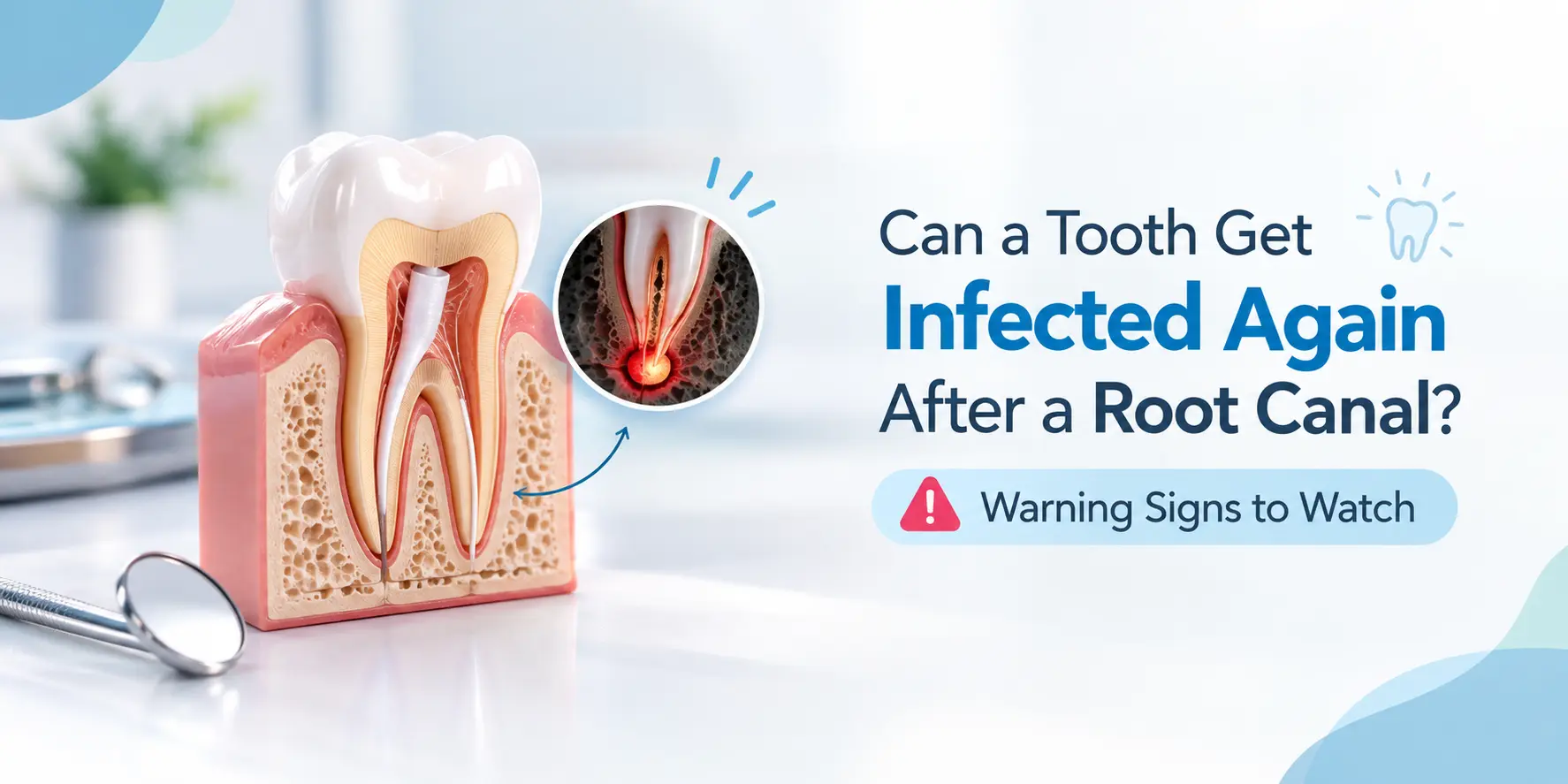
A root canal is meant to be a permanent fix. It removes infected or inflamed pulp from inside the tooth, seals the space, and lets you keep your natural tooth instead of losing it. But every so often, a patient comes back months or even years later asking the same worried question: "I had a root canal, so why does this tooth hurt again?"
The short answer is yes, a tooth that has already had root canal treatment can become infected again. It's not common, but it does happen, and catching it early makes a real difference in how it's treated. Here's what actually causes it, the warning signs to watch for, and what your options look like if it happens to you.
Wait, Isn't a Root Canal Supposed to Be Permanent?
For the vast majority of patients, it is. Root canal treatment has a high long-term success rate when it's done correctly and the tooth is properly restored afterward, usually with a crown. Most treated teeth go on to function normally for the rest of a patient's life.
But "high success rate" isn't the same as "zero risk." A treated tooth no longer has living pulp tissue inside it, which means it can't fight off bacteria the way a healthy tooth can. If bacteria find a way back in, through a new cavity, a cracked filling, or a leak in the seal, there's nothing inside the tooth to stop an infection from taking hold again.
What Causes a Root Canal-Treated Tooth to Get Infected Again?
There are a few common reasons a previously treated tooth can develop a new or persistent infection:
Missed or hidden canals
Teeth, especially molars, can have extra canals that are narrow, curved, or hidden from view. If one is missed during the original treatment, bacteria left behind can continue to cause problems.
A cracked tooth or fracture
Root canal-treated teeth are more brittle than healthy teeth because they no longer have a blood supply. Even a hairline crack can let bacteria seep down into the tooth over time.
A new cavity
Yes, a tooth that's had a root canal can still get a regular cavity. If decay reaches the treated area, it can reintroduce infection.
A loose, cracked, or missing crown
If the crown or filling placed after the root canal doesn't seal the tooth properly, or comes loose over time, bacteria can leak in through the gap.
Delayed restoration
Waiting too long to get a permanent crown placed after a root canal leaves the tooth vulnerable in the meantime.
Complex root canal anatomy
Some teeth simply have root structures that are difficult to fully clean and seal, even with the best technique.
Warning Signs Your Root Canal-Treated Tooth May Be Reinfected
Because the nerve has already been removed, pain from a reinfected tooth can be less obvious than the pain that sent you in for the original treatment. Still, watch for:
- Lingering or returning pain in the tooth, especially when biting or chewing
- Swelling in the gum near the tooth, or in the face or jaw
- A pimple-like bump on the gum (this can be a sign of a draining abscess)
- Tenderness when you press on the tooth or the gum around it
- Sensitivity to hot or cold that doesn't go away quickly
- Discoloration of the tooth, appearing darker than neighboring teeth
- A bad taste or odor coming from the area
Some reinfections are silent for a while and only show up on a dental X-ray during a routine checkup. That's another reason regular visits matter even after treatment is "done."
What Should You Do If You Notice These Signs?
Don't wait it out. An infection in a root canal-treated tooth won't resolve on its own, and it can spread to the surrounding bone and tissue if left untreated. Call your dentist as soon as you notice symptoms so the tooth can be examined and X-rayed.
What Are Your Treatment Options?
The right next step depends on what's causing the problem:
Endodontic Retreatment
In many cases, the original root canal can be redone. The tooth is reopened, the old filling material is removed, the canals are recleaned and checked more thoroughly (including for any canals that may have been missed), and the tooth is resealed.
Apicoectomy
If retreatment isn't enough or isn't possible, a minor surgical procedure can remove the infected tissue at the very tip of the root through the gum, without redoing the entire canal.
Extraction
If the tooth is severely cracked, has extensive bone loss around it, or can't be predictably saved, removal followed by an implant, bridge, or partial denture may be the more reliable long-term option.
A thorough evaluation, including an X-ray and a conversation about the tooth's history, is the only way to know which path makes sense for your situation.
Can You Prevent Reinfection After a Root Canal?
Not every case is preventable, especially those caused by hidden canal anatomy. But there's a lot within your control:
- Get your permanent crown placed promptly after the root canal is completed
- Keep up with routine dental checkups and cleanings so any new decay or crown issues are caught early
- Avoid chewing hard items like ice, hard candy, or pen caps with a treated tooth
- Practice consistent oral hygiene to prevent new decay from developing around the restoration
- Address a cracked or loose crown immediately rather than waiting for it to become painful
Conclusion
A root canal is designed to save your tooth for the long term, and for most patients, it does exactly that. But it isn't an absolute guarantee against future problems. If pain, swelling, or sensitivity shows up in a tooth you thought was already treated, it's worth getting checked rather than assuming it will pass.
At Elite Smile Family Dentistry, our team evaluates each case carefully, whether that means retreatment, a surgical option, or discussing extraction and replacement, so you get a recommendation based on what's realistically best for your tooth, not a one-size-fits-all answer.
Noticing pain in a tooth that's already had a root canal? Don't wait for it to get worse. Schedule an appointment with our Northville team today, or call us at 734-446-6440.
Frequently Asked Questions About Dental Visits
How long after a root canal can a tooth get reinfected?
It can happen at any point: weeks, months, or even years later. Reinfection isn't tied to a specific timeline; it depends on factors like the crown's seal, new decay, or fractures developing over time.
Does a reinfected root canal tooth always need to be extracted?
No. Retreatment or an apicoectomy can often save the tooth. Extraction is usually considered only when the tooth can't be reliably restored.
Is retreatment painful?
Retreatment is performed similarly to the original root canal, with local anesthesia, and most patients report a comparable level of comfort to their first procedure.
Can a root canal fail without any symptoms?
Yes. Some reinfections are only discovered through a routine X-ray, which is one reason regular dental visits remain important even after root canal treatment.