
Chipped Tooth Treatment: How to Fix a Chipped Tooth, Explained by Northville Dentist

A chipped tooth can happen in an instant. You might bite down on something hard, experience a sports injury, or simply notice that a small piece of your tooth has broken away. Even a minor chip can affect the appearance of your smile, while a larger chip may cause sensitivity, sharp edges, or difficulty chewing.
The good news is that chipped tooth treatment is often straightforward. Depending on the size, location, and severity of the damage, your dentist may recommend dental bonding, veneers, a filling, or a dental crown.
If you've chipped a tooth, it's important not to assume that the damage is only cosmetic. A dental examination can determine whether the tooth has additional damage and which treatment is most appropriate.
At Elite Smile Family Dentistry, we help patients in Northville, MI, explore personalized options for restoring damaged or chipped teeth while maintaining a natural-looking smile.
What Is the Best Treatment for a Chipped Tooth?
The best chipped tooth treatment depends on how much tooth structure has been lost and whether the tooth's deeper layers are damaged. Dental bonding is often used for small chips, while veneers or crowns may be considered for larger or more structurally significant damage. Your dentist can recommend the appropriate option after examining the tooth.
Key Takeaways
- Small chips can often be repaired with dental bonding.
- Larger or more noticeable chips may require veneers or a crown.
- A chipped tooth can sometimes cause sensitivity or sharp edges.
- A dental examination is important to rule out more serious damage.
- Avoid chewing hard foods on the affected tooth until it has been evaluated.
- Treatment can often restore both the appearance and function of the tooth.
What Causes a Chipped Tooth?
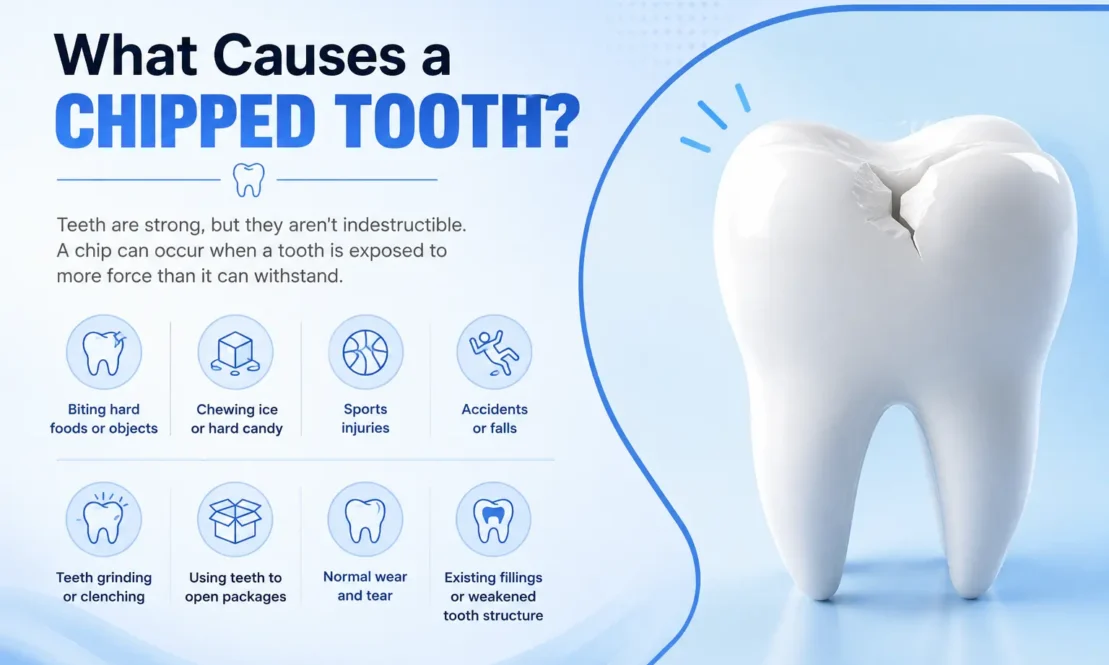
Teeth are strong, but they aren't indestructible. A chip can occur when a tooth is exposed to more force than it can withstand.
Common causes include:
- Biting hard foods or objects
- Chewing ice or hard candy
- Sports injuries
- Accidents or falls
- Teeth grinding or clenching
- Using teeth to open packages
- Normal wear and tear
- Existing fillings or weakened tooth structure
Front teeth are particularly noticeable when chipped because even a small amount of lost enamel can change the appearance of your smile.
What Does a Chipped Tooth Feel Like?
A small chip may not cause any pain at all. You may simply notice that the tooth looks different or feels rough when you run your tongue over it.
Depending on the extent of the damage, you may experience:
- Sensitivity to hot or cold
- A sharp or rough edge
- Pain when biting
- Tenderness around the tooth
- Irritation to your tongue or cheek
- A noticeable change in the tooth's appearance
If the chip is accompanied by significant pain, swelling, or sensitivity that persists, the damage may extend deeper than the enamel.
Chipped Tooth Treatment Options
There isn't one treatment that works for every chipped tooth. Your dentist will consider the location of the chip, the amount of tooth structure lost, your oral health, and your cosmetic goals.
1. Dental Bonding
Dental bonding is a common treatment for small or moderate chips.
During bonding, a tooth-colored composite material is applied to the damaged area and carefully shaped to restore the tooth's appearance. The material is then hardened and polished.
Bonding can be particularly useful for minor chips on front teeth because the material can be matched to the natural shade of your tooth.
Benefits of dental bonding include:
- Natural-looking results
- Usually requires little removal of tooth structure
- Can repair relatively small chips
- Often completed in a single dental visit
- Can improve both shape and appearance
If you're mainly concerned about a small cosmetic chip, ask your dentist whether bonding could be an appropriate option.
2. Dental Veneers
A dental veneer is a thin covering placed over the front surface of a tooth.
Veneers may be considered when a chipped front tooth is also affected by other cosmetic concerns, such as discoloration, uneven shape, or minor spacing.
Unlike bonding, veneers are designed to cover the visible front surface of the tooth and can be part of a broader smile makeover.
Because veneers involve different considerations than bonding, your dentist should evaluate whether your tooth is healthy and structurally suitable for this treatment.
3. Dental Crown
A dental crown may be recommended when a significant portion of the tooth has been damaged or when the remaining tooth structure needs additional protection.
A crown covers the tooth and helps restore its shape, strength, and function.
Crowns are generally more extensive than bonding and may be appropriate when a chip is large, or the tooth has already been weakened by decay, a large filling, or previous dental treatment.
4. Filling or Restorative Treatment
For certain small chips, a dentist may use a tooth-colored filling material to restore the missing portion.
The appropriate approach depends on the location and extent of the damage. Your dentist will evaluate the tooth before recommending a restoration.
Chipped Tooth vs. Cracked Tooth: What's the Difference?
A chipped tooth and a cracked tooth aren't the same thing.
Chipped Tooth | Cracked Tooth |
A piece of the tooth breaks away | A fracture develops within the tooth |
Often affects the enamel | May extend into deeper tooth structures |
May be painless | Can cause pain when biting |
Often repaired with bonding | May require a crown or root canal |
Usually noticeable on the tooth surface | May be difficult to see |
If you're experiencing sharp pain when biting or releasing your bite, don't assume you only have a small chip. A dental examination can help determine whether the tooth has a deeper fracture.
Does a Chipped Tooth Need Treatment?
Not every small chip requires extensive treatment, but every new chip should be evaluated by a dentist.
A very small enamel chip may require little or no treatment if it doesn't affect the tooth's function or appearance. However, your dentist should still examine the tooth to determine whether there is underlying damage.
Treatment may be recommended if the chip:
- Causes pain or sensitivity
- Has created a sharp edge
- Affects your bite
- Changes the appearance of your smile
- Exposes deeper tooth structure
- Occurred because of an injury
What Should You Do Immediately After Chipping a Tooth?
If you chip a tooth, take a few simple precautions until you can see your dentist.
Do:
- Rinse your mouth gently with water.
- Save any large piece of tooth if you can find it.
- Avoid chewing on the affected side.
- Choose softer foods temporarily.
- Contact your dentist for an evaluation.
Don't:
- Chew ice or hard foods.
- Try to file the tooth yourself.
- Use the tooth to open packages.
- Ignore significant pain or swelling.
If the chip occurred because of trauma and you also have severe pain, bleeding, swelling, or other injuries, seek prompt dental care.
When Is a Chipped Tooth a Dental Emergency?
A small, painless chip usually isn't an emergency. However, prompt dental attention is important if you have:
- Severe or persistent tooth pain
- Significant swelling
- Bleeding that doesn't stop
- A large portion of the tooth is missing
- A tooth that has become loose
- Major facial or dental trauma
- Significant sensitivity after an injury
If you're unsure how serious the damage is, contacting a dentist is the safest approach.
How Can You Prevent Chipped Teeth?
While accidents can't always be prevented, several habits can help protect your teeth.
- Don't chew ice or hard objects.
- Avoid biting directly into very hard foods.
- Wear a mouthguard during contact sports.
- Don't use your teeth as tools.
- Talk to your dentist if you grind or clench your teeth.
- Maintain regular dental checkups.
- Address weakened or damaged teeth before they become more vulnerable.
Protecting your teeth is especially important if you've previously experienced a chip or fracture.
Chipped Tooth Treatment in Northville, MI
If you have a chipped tooth and aren't sure which treatment is right for you, a professional evaluation is the best place to start.
At Elite Smile Family Dentistry, we provide personalized dental care for patients in Northville, MI, and surrounding communities. Depending on the condition of your tooth and your goals, our team can discuss restorative and cosmetic options designed to improve both function and appearance.
If you're considering chipped tooth treatment in Northville, we can evaluate your tooth and help you understand which option may be appropriate for your situation.
Final Thoughts
A chipped tooth can be frustrating, but in many cases, it can be repaired with a relatively straightforward dental procedure. The right chipped tooth treatment depends on the amount of damage, the location of the tooth, and your overall dental health.
Small chips may often be repaired with dental bonding, while larger or more complex damage may require a veneer or crown. The most important step is having the tooth examined rather than trying to determine the severity yourself.
If you've recently chipped a tooth or are unhappy with the appearance of an existing chip, Elite Smile Family Dentistry can help you explore your options.
Restore Your Smile at Elite Smile Family Dentistry
Looking for a cosmetic dentist in Northville? Our team at Elite Smile Family Dentistry provides personalized cosmetic and restorative dental care designed around your smile and oral health.
Schedule an appointment today to find out which chipped tooth treatment may be right for you.
Frequently Asked Questions
Can a chipped tooth grow back?
No. Tooth enamel cannot grow back after it has been lost. However, a dentist can restore the appearance and function of a chipped tooth with treatments such as bonding, veneers, or a crown, depending on the extent of the damage.
Is dental bonding good for a chipped tooth?
Dental bonding can be an effective option for many small chips, particularly on front teeth. It uses tooth-colored composite material to rebuild the missing portion. Your dentist can determine whether bonding is suitable based on the location and severity of the chip.
Can I leave a small chipped tooth untreated?
A very small chip may not require extensive treatment, but it should still be examined. Your dentist can check for additional damage and determine whether the tooth needs repair.
How long does chipped tooth treatment take?
Treatment time depends on the procedure. Some small chips can be repaired relatively quickly with dental bonding, while veneers and crowns generally require additional planning and appointments.
Can a chipped tooth become infected?
A minor enamel chip generally doesn't expose the tooth's inner tissues. However, deeper damage may expose vulnerable tooth structures and increase the risk of complications. Pain, swelling, or persistent sensitivity should be evaluated promptly.
Is a chipped tooth the same as a cracked tooth?
No. A chip involves a piece of the tooth breaking away, while a crack is a fracture that can extend through the tooth. Cracks may cause pain when chewing and sometimes require more extensive treatment.