
Crowns and Bridges: Which Tooth Replacement Option Is Right for You?
Missing or damaged teeth can affect more than just your smile; they can impact your confidence, speech, and ability to enjoy your favorite foods. If you’re dealing with these issues, crowns and bridges are two of the most effective solutions in modern dentistry. But how do you know which option is right for you?
At Elite Smile Family Dentistry in Northville, we help patients restore their smiles with personalized, long-lasting treatments. In this guide, we’ll break down everything you need to know about crowns and bridges, so you can make an informed decision for your oral health.
What Are Crowns and Bridges?
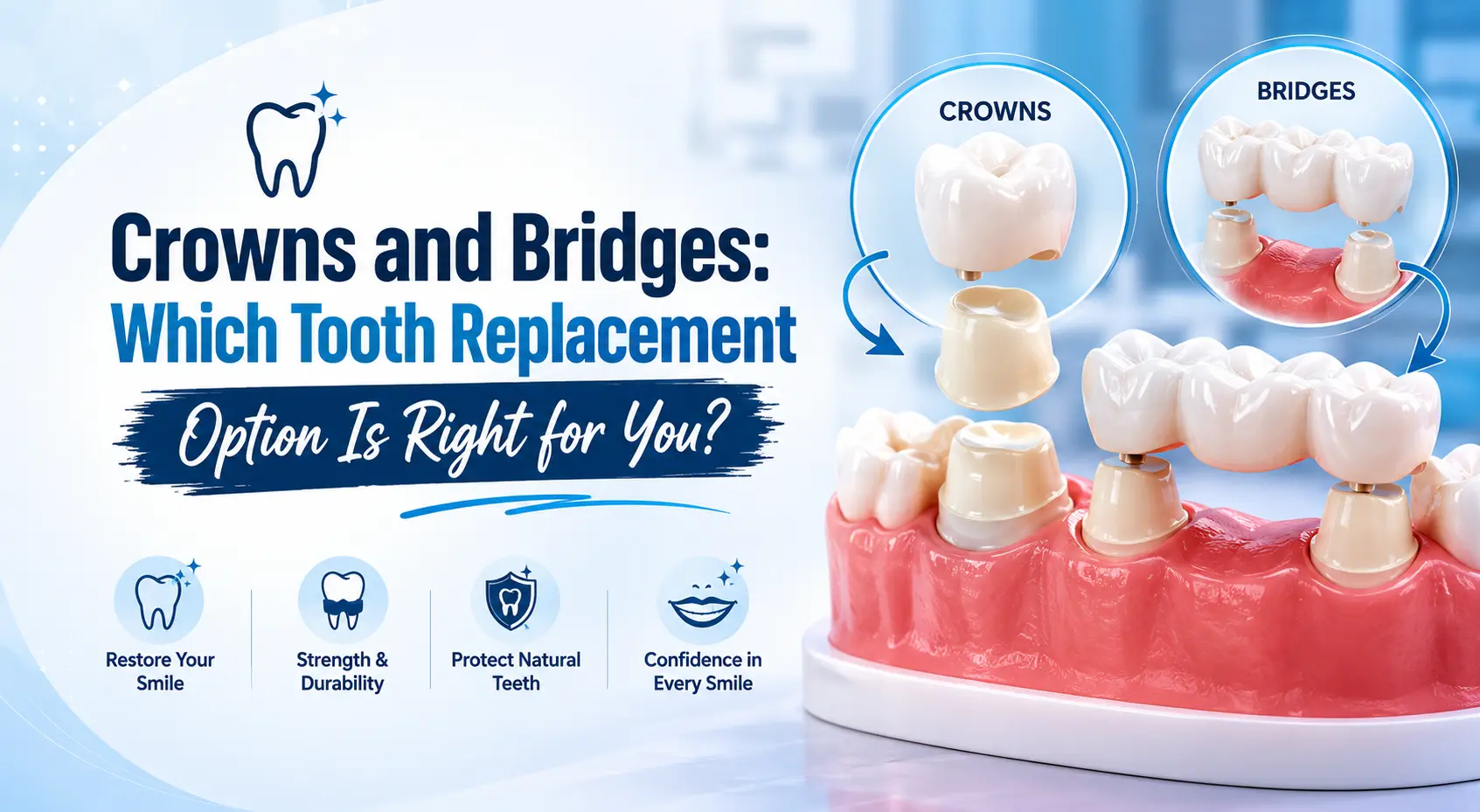
Dental crowns and dental bridges are popular tooth replacement options used to restore damaged or missing teeth.
- Dental Crowns:
- A crown is a custom-made cap placed over a damaged or weakened tooth. It restores the tooth’s shape, strength, and appearance. Crowns are commonly used for the repair of damaged teeth, especially after decay, fractures, or root canal treatment.
- Dental Bridges:
- A bridge is used to restore missing teeth by filling the gap with one or more artificial teeth. These are anchored in place using crowns on the adjacent natural teeth.
Both options play a key role in oral health restoration and are widely used in cosmetic dentistry to improve both function and appearance.
Key Differences Between Crowns and Bridges
Understanding the difference between dental crowns and dental bridges can help you choose the right treatment.
- Purpose:
- Crowns are used to protect and restore a single damaged tooth, while bridges replace one or more missing teeth.
- Placement:
- A crown covers an existing tooth, whereas a bridge spans the gap left by missing teeth and is supported by neighbouring teeth.
- Function:
- Crowns strengthen weakened teeth. Bridges restore chewing ability and prevent surrounding teeth from shifting.
In simple terms, if your tooth is still present but damaged, a crown is likely the solution. If you have missing teeth, a bridge may be recommended.
Benefits of Crowns and Bridges
Choosing crowns and bridges offers several advantages for both your oral health and confidence.
- Restores Function: Eat, speak, and smile comfortably again.
- Improves Appearance: These restorations are designed to match your natural teeth, enhancing your smile.
- Prevents Further Damage: Crowns protect weakened teeth, while bridges prevent shifting of surrounding teeth.
- Durable and Long-Lasting: With proper care, both crowns and bridges can last many years.
Supports Overall Oral Health: They help maintain alignment and reduce the risk of future dental issues.
Crowns vs Bridges - Which Option Is Right for You?
Choosing between crowns and bridges depends on several factors:
- Number of Missing Teeth: A single damaged tooth may need a crown, while multiple missing teeth may require a bridge.
- Condition of Surrounding Teeth: Healthy adjacent teeth are necessary to support a bridge.
- Budget and Preferences: Costs can vary, and your dentist will help you choose the best option based on your needs.
- Long-Term Goals: Your overall oral health and lifestyle will influence the right choice.
A consultation with a dental professional in Northville is the best way to determine the most suitable treatment plan.
Procedure: What to Expect
Getting crowns and bridges is a straightforward process, usually completed in a few visits:
- Consultation and Examination: Your dentist evaluates your oral health and discusses treatment options.
- Tooth Preparation: The affected teeth are reshaped to fit the crown or support the bridge.
- Impressions: Molds are taken to create custom restorations that fit perfectly.
- Temporary Restoration: A temporary crown or bridge may be placed while the permanent one is being made.
Final Placement: The custom crown or bridge is securely fitted and adjusted for comfort.
How Long Do Crowns and Bridges Last?
The lifespan of crowns and bridges depends on several factors, including oral hygiene and lifestyle habits.
- Average Lifespan:
- Typically 10-15 years, but many last longer with proper care.
- Factors That Affect Longevity:
- Daily oral hygiene habits
- Diet and chewing habits
- Regular dental checkups
- Avoiding teeth grinding or clenching
Maintaining good oral care is essential for long-term success.
Cost of Crowns and Bridges in Northville
The cost of crowns and bridges can vary depending on the complexity of the treatment, materials used, and individual patient needs.
- General Factors Affecting Cost:
- Type of material (porcelain, ceramic, metal)
- Number of teeth involved
- Additional procedures required
Many dental insurance plans may cover part of the treatment, especially if it’s medically necessary. It’s best to consult your dental provider in Northville for a personalized estimate and insurance guidance.
How to Care for Your Crowns and Bridges
Proper care can extend the life of your dental crowns and dental bridges.
- Brush twice daily using a soft-bristled toothbrush
- Floss regularly, especially around the bridge area
- Avoid hard or sticky foods that may damage restorations
- Visit your dentist regularly for checkups and cleanings
- Use a night guard if you grind your teeth
Consistent care ensures your restorations remain strong and functional.
Conclusion
When it comes to restoring your smile, crowns and bridges are reliable and effective solutions. Whether you need to repair a damaged tooth or replace missing ones, these treatments can significantly improve your oral health and confidence.
If you’re unsure which option is right for you, the team at Elite Smile Family Dentistry in Northville is here to help. Schedule a consultation today and take the first step toward a healthier, more confident smile.
FAQs
Are crowns and bridges painful?
The procedure is generally not painful. Dentists use local anesthesia to ensure your comfort throughout the treatment.
How do I know if I need a crown or a bridge?
If you have a damaged tooth, a crown may be recommended. If you’re missing one or more teeth, a bridge could be a better option.
Are bridges better than implants?
Both have their benefits. Bridges are quicker and less invasive, while implants offer a more permanent solution. Your dentist can help you decide.
How long does the procedure take?
Most treatments are completed in 2–3 visits over a few weeks.
Can crowns and bridges look natural?
Yes, modern materials are designed to match your natural teeth, providing a seamless and attractive smile.