
What Happens Inside Your Mouth After a Dental Implant Is Placed?
Getting a dental implant is a major step toward restoring your smile and improving your oral health. Many patients choose implant dentistry because it offers a long-lasting and natural-looking solution for missing teeth. But after the implant is placed, many people wonder what actually happens inside their mouth during the healing process.
Understanding what occurs after dental implant surgery can help patients feel more confident and prepared for the recovery journey. At Elite Smile Family Dentistry, patients are often curious about how the implant integrates with the jawbone and how the body adapts to the new artificial tooth root.
In this article, we’ll explain what happens inside your mouth after a dental implant is placed, including the healing process, bone integration, and the stages that lead to a fully restored smile.
Understanding Implant Dentistry
Implant dentistry focuses on replacing missing teeth with dental implants that function like natural tooth roots. A dental implant is typically made from titanium and is surgically placed into the jawbone where the missing tooth once existed.
Unlike traditional dentures or bridges, dental implants integrate directly with the bone, creating a stable and permanent foundation for replacement teeth.
At Elite Smile Family Dentistry, dental implants are carefully planned using modern techniques and imaging technology to ensure proper placement and long-term success.
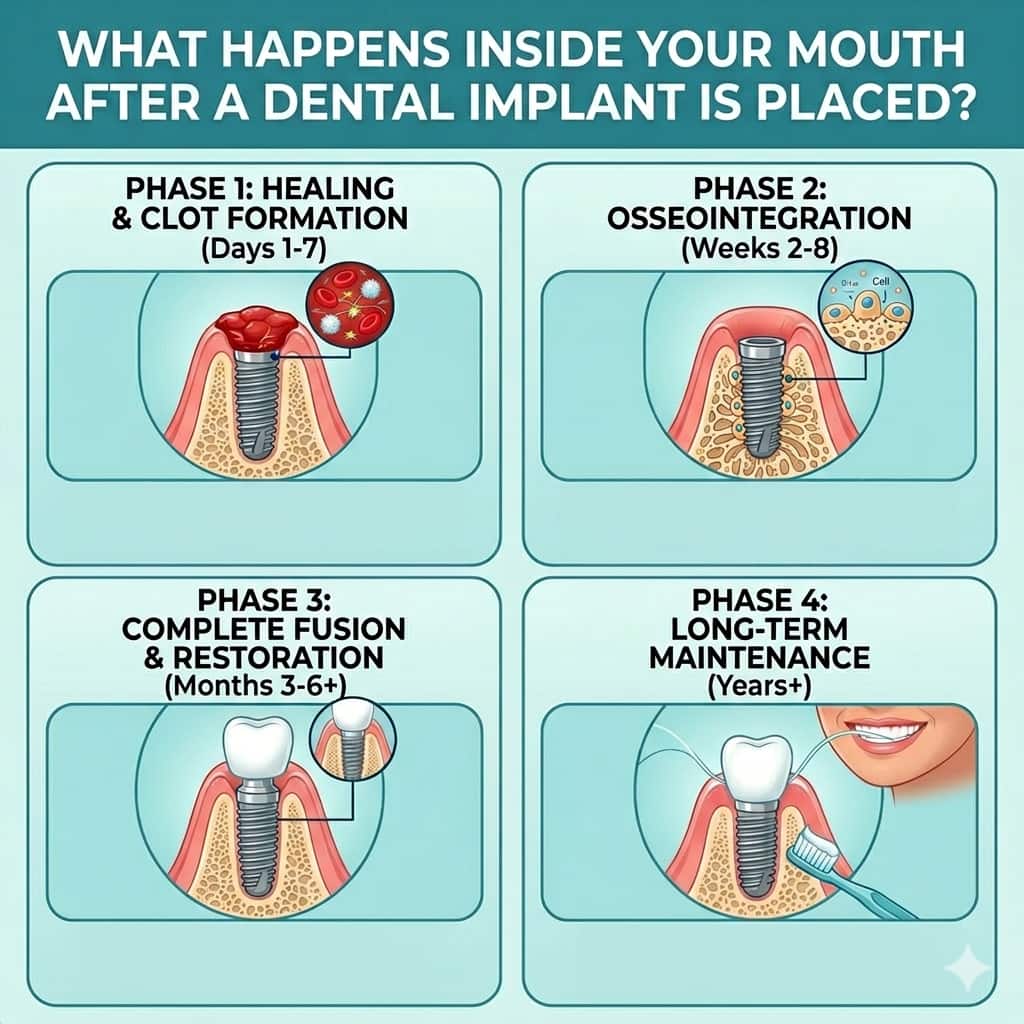
Stage 1: Immediate Healing After Implant Placement
Right after the dental implant is placed into the jawbone, your body immediately begins the healing process.
During the first few days:
- The surrounding gum tissue begins to close around the implant.
- Blood cells gather at the surgical site to begin tissue repair.
- Mild swelling and tenderness may occur.
This stage is a natural response from the body as it starts protecting and healing the treated area.
Patients at Elite Smile Family Dentistry are given post-procedure care instructions to help ensure a smooth recovery and minimize discomfort during this early stage.
Stage 2: The Osseointegration Process
One of the most fascinating aspects of implant dentistry is a process called osseointegration.
Osseointegration occurs when the jawbone gradually fuses with the titanium implant. Instead of rejecting the implant, the bone cells grow around it and attach to its surface.
This process usually takes several weeks to a few months and is what makes dental implants incredibly strong and stable.
During osseointegration:
- Bone tissue grows around the implant.
- The implant becomes anchored in the jawbone.
- The implant begins functioning like a natural tooth root.
At Elite Smile, careful treatment planning helps ensure that this process occurs successfully.
Stage 3: Bone Remodeling Around the Implant
After the implant begins integrating with the bone, the jawbone starts a process known as bone remodeling.
It helps strengthen the area around the implant. The bone adapts to the new structure and redistributes pressure from chewing.
This stage is important because it:
- Increases implant stability
- Helps maintain jawbone density
- Supports long-term implant success
Bone remodeling also prevents the bone loss that commonly occurs after a tooth is lost.
Stage 4: Gum Tissue Healing and Adaptation
While the bone is integrating with the implant, the gum tissue around the implant also continues to heal.
Healthy gum tissue forms a protective seal around the implant, which helps prevent bacteria from entering the area.
At Elite Smile Family Dentistry, dentists carefully monitor gum health to ensure the implant site heals properly.
Healthy gums are essential for the long-term success of implant dentistry treatments.
Stage 5: Placement of the Abutment
Once the implant has fully integrated with the bone, the next step is placing the abutment.
The abutment is a small connector that attaches to the implant and holds the final dental crown in place.
This stage involves:
- Exposing the implant if it was placed beneath the gum
- Attaching the abutment
- Allowing the gum tissue to heal around the connector
This step prepares the implant for the final restoration.
Stage 6: Placement of the Final Dental Crown
The final step in implant dentistry is placing the custom dental crown.
The crown is designed to match the color, shape, and size of the surrounding teeth so that it blends naturally with your smile.
Once the crown is placed:
- The implant looks like a natural tooth
- Chewing ability is fully restored
- The smile appears complete again
At Elite Smile Family Dentistry, custom restorations are designed to provide both durability and aesthetics.
Why Dental Implants Are So Successful
Dental implants have one of the highest success rates in modern dentistry.
Studies show that implants have a success rate of around 95–98% when properly placed and maintained.
This high success rate is due to several factors:
- Titanium’s compatibility with the human body
- The osseointegration process
- Careful treatment planning in implant dentistry
When performed by experienced dental professionals, implants can last decades or even a lifetime.
How to Support Healing After Dental Implant Surgery
Patients can take several steps to support healing after implant placement.
Maintain Good Oral Hygiene
Keeping the mouth clean helps prevent infection and promotes healthy gum tissue.
Follow Post-Surgery Instructions
Your dentist may recommend soft foods, gentle brushing, and avoiding certain activities during the healing period.
Avoid Smoking
Smoking can slow healing and interfere with the osseointegration process.
Attend Follow-Up Visits
Regular checkups at Elite Smile Family Dentistry allow dentists to monitor the implant and ensure the healing process is progressing correctly.
Long-Term Benefits of Implant Dentistry
Once the dental implant has fully healed, patients enjoy several long-term benefits.
Restored Chewing Ability
Dental implants allow patients to eat comfortably and enjoy a variety of foods again.
Natural Appearance
Implant crowns are custom-designed to look like natural teeth.
Prevention of Bone Loss
Because implants stimulate the jawbone, they help maintain bone density.
Long-Lasting Solution
With proper care, dental implants can last 20 years or longer, and many patients keep them for a lifetime.
Why Choose Elite Smile Family Dentistry for Implant Dentistry?
Choosing an experienced dental team is essential for successful implant treatment.
At Elite Smile Family Dentistry, patients benefit from:
- Advanced implant technology
- Personalized treatment planning
- Experienced dental professionals
- High-quality restorations designed for durability and aesthetics
The goal is to restore not only your teeth but also your confidence and quality of life.
Conclusion
After a dental implant is placed, a remarkable process begins inside your mouth. The body works to heal the gum tissue, integrate the implant with the jawbone, and create a strong foundation for a new tooth.
Through the process of osseointegration, the implant becomes a permanent part of your jaw, providing stability and durability that closely mimic natural teeth.
Thanks to advancements in implant dentistry, dental implants are one of the most reliable and effective solutions for replacing missing teeth.
If you’re considering dental implants, the team at Elite Smile Family Dentistry can guide you through every step of the process and help you restore your smile with confidence.
Schedule a consultation today to learn how implant dentistry can transform your oral health and bring back your natural smile.
FAQs About Implant Dentistry
How long does it take for a dental implant to heal?
Healing usually takes between 3 to 6 months, depending on the patient’s bone health and overall healing ability.
Is it normal to feel discomfort after implant surgery?
Mild swelling and tenderness are normal during the first few days after the procedure.
What is osseointegration?
Osseointegration is the process where the jawbone fuses with the titanium implant, creating a stable foundation for the replacement tooth.
Can dental implants fail?
Implant failure is rare but can occur due to infection, poor oral hygiene, or smoking.
Where can I get dental implants in Northville?
Patients seeking professional implant dentistry in Northville can visit Elite Smile Family Dentistry for advanced dental implant treatment.